

If you own a home in Colorado Springs, choosing the right roofing material might be more challenging than in other parts of the country.
Between hailstorms, high UV exposure at elevation, wind events, rapid temperature swings, and freeze-thaw cycles, roofing materials here are tested in ways they simply aren’t in milder climates.
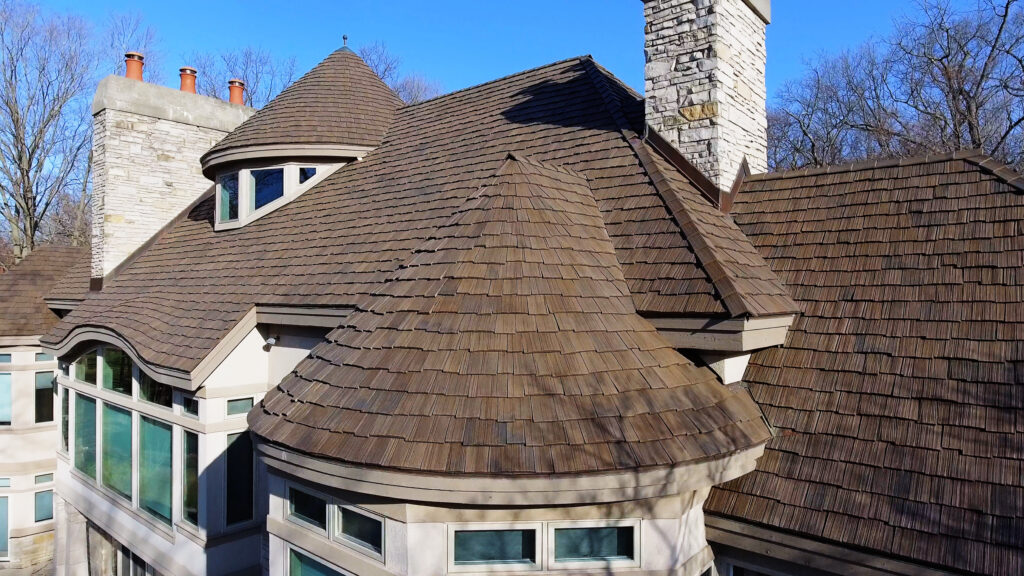
That’s why more homeowners are asking about synthetic composite roofing, including synthetic composite slate, Spanish barrel tile, and shake.
The real question isn’t “Is it popular?”
It’s: Does it actually make sense for my house?
Let’s walk through it logically.
Why Roofing Material Matters More in Colorado Springs
In some parts of the country, asphalt shingles last 25–30 years without much drama.
But in Colorado Springs, that timeline can look very different — especially in hail-prone neighborhoods along the Front Range.
That’s why understanding how to choose the right roofing material isn’t just a design decision here — it’s a durability decision.
Here, roofing material isn’t just about curb appeal. It’s about:
- Impact resistance
- UV stability
- Moisture performance in freeze-thaw cycles
- Fire resistance
- Long-term structural considerations
When you’re replacing a roof that may cost $18,000–$25,000 or more, the material choice isn’t cosmetic. It’s strategic.
What Is Synthetic Composite Roofing?
Synthetic composite roofing products are engineered materials designed to replicate the appearance of:
- Natural slate
- Cedar shake
- Clay or concrete barrel tile
Instead of stone or wood, they’re manufactured from advanced polymer blends — often incorporating recycled materials.
The goal is simple: deliver architectural detail and durability without some of the weaknesses of natural materials.
Where Synthetic Composite Roofing Performs Well in Colorado Springs
1. Impact Resistance (Hail)
This is the big one.
Many synthetic composite products carry high impact ratings. That matters in a region where hail claims are common.
Is anything hail-proof? No.
But higher impact resistance can reduce the likelihood of cracking or splitting compared to more brittle materials.
If hail exposure is a top concern for you, this category deserves serious consideration.
2. Weight Compared to Natural Slate
Natural slate is beautiful — and extremely heavy.
In some cases, homes require structural reinforcement to support it. Synthetic composite slate achieves a similar appearance at a significantly lighter weight.
That makes it more adaptable for homes that weren’t originally designed for stone.
3. Moisture and Freeze-Thaw Performance
Wood absorbs moisture. Stone can fracture under certain conditions. Freeze-thaw cycles accelerate wear in porous materials.
Composite products are engineered to resist water absorption, which helps reduce expansion, cracking, and long-term deterioration.
In Colorado Springs, that engineering matters.
4. Fire Resistance
For homeowners near open space or in higher-risk areas, fire rating becomes part of the conversation.
Many synthetic composite roofing systems carry strong fire-resistance classifications, making them worth evaluating in wildfire-prone regions.
5. Sustainability
This doesn’t drive every decision — but it’s worth mentioning.
Many composite roofing products are manufactured using recycled materials. Some can also be recycled again at the end of their service life.
If you’re thinking long-term about material stewardship, that’s part of the equation.
The Tradeoffs (Because There Always Are Some)
No roofing material is perfect.
Synthetic composite roofing is typically:
- More expensive than standard asphalt shingles
- A premium product category
- Dependent on proper installation for full performance
If your primary goal is lowest upfront cost, this probably isn’t your lane.
But if your goal is long-term durability with architectural detail, then cost has to be weighed against lifespan, maintenance, and resilience.
Who It Makes Sense For
In our experience working with Colorado Springs homeowners, synthetic composite roofing tends to make sense for people who:
- Plan to stay in the home long-term
- Care about both durability and appearance
- Are concerned about hail performance
- Want something engineered rather than purely natural
- Are comfortable investing more upfront for long-term performance
It’s usually not an impulse decision after a single storm.
It’s a strategic upgrade.
Final Thoughts
Roof replacement is one of the largest exterior investments you’ll make in your home.
In Colorado Springs, roofing decisions should be based on facts and long-term planning — especially when you’re spending this kind of money. It should be the right solution for your home, not something you were pressured into after a storm.
Synthetic composite roofing isn’t for everyone. But for the right home, in the right situation, it can be a very strong option.
The key is understanding when it makes sense — and when it doesn’t.
How We Approach It at Homestead Roofing
At Homestead Roofing, our job isn’t to push a particular material. It’s to help you evaluate whether a product makes sense for your home, your goals, and your risk tolerance here in Colorado Springs.
Sometimes synthetic composite roofing is the right fit.
Sometimes it isn’t.
What matters most is understanding the tradeoffs clearly before committing to a major investment. We believe homeowners should be able to explain why they chose a material — not just what they chose.
If you’re researching synthetic composite roofing and trying to separate marketing claims from practical reality, that’s a smart place to start.
The right decision is the one that holds up — both structurally and logically — long after the storm has passed.